
ORDER UTILITY
Fill out the fields below to receive your selected utility
[contact-form-7 404 "Not Found"]


Last week began our weekly CareOptimize COVID-19 Webinar Series. The first of these webinars focused on CMS regulatory program submission changes and recent updates and how telemedicine and telehealth are quickly becoming new sources of revenue.
In this week’s CareOptimize COVID-19 Webinar, we will continue bringing you the most up-to-date news from CMS along with other regulatory changes affecting the healthcare industry. Our primary focus is on a trio of distinct provider models and how each of them is managing their practices while adapting to the challenges of the pandemic. We’ll also be going over the technology CareOptimize has developed aimed at streamlining COVID-19 monitoring and reporting.
This week’s CareOptimize COVID-19 Webinar will be held this Wednesday, April 1st at 2 PM Eastern Time. To register for this webinar, please click the following link. You can watch all of the previous webinars by visiting the official CareOptimize page on YouTube or visiting the Insights page on our website.
This update is provided by CareOptimize. We provide healthcare management consulting services and products and we’ve helped numerous healthcare organizations succeed for more than a decade. We provide managed care solutions as well as products like coding modules, next-generation EHR utilities, MIPS consulting, and more. For more information, please call 855.937.8475.
As the COVID-19 pandemic continues to affect practices, we’re doing what we can to help practices adapt to the challenges. In case you missed it, we recently kicked off the first of our CareOptimize COVID-19 Webinar Series.
The first edition was held this past Wednesday and focused on the recent trends and innovations in the healthcare industry such as regulatory billing and optimum practices to improve revenue. We also took a close look at CMS regulatory program submission changes and several of the differences between Telemedicine and Telehealth.
You can register to our next Webinar by clicking the link. Make sure to bookmark our YouTube page and be sure to subscribe to stay updated on future webinars.
 This update is provided by CareOptimize. We provide healthcare management consulting services and products and we’ve helped numerous healthcare organizations succeed for more than a decade. We provide managed care solutions as well as products like coding modules, next-generation EHR utilities, MIPS consulting, and more. For more information, please call 855.937.8475.
 Per a recent HFMA survey, nearly 70% of leaders in healthcare revenue cycle are putting funds toward technology capable of improving the integrity of revenue, getting rid of human error, and boosting efficiency. Yet a major and largely unexplored opportunity for many companies to boost performance comes down to a familiar word: data.
Healthcare organizations still have a long way to go in areas like addressing out-of-pocket cost concerns with consumers, reducing collection costs, and cutting down on the rise of initial denial rates. A back to basics approach could be a viable solution even as digital automation becomes prevalent.
By performing some analysis, revenue cycle leaders can take a look at potential breakdowns during the revenue cycle process before they become a major issue. For example, an organization dealing with an unusually high discharged-not-final-billed (DNFB) rate can do analysis to figure which types of claims are stalling the claims submission process.
Data analysis provides revenue cycle leaders with a roadmap of where traditional claim processing failures originate and the forms of claim rejections and denials most commonly encountered. These may include additional documentation, failing to acquire prior authorization, or not filing on time.
To read more about the HFMA survey, visit https://guidehouse.com/insights/healthcare/2019/hfma-rcm-survey.
This update is provided by CareOptimize. We provide healthcare management consulting services and products and we’ve helped numerous healthcare organizations succeed for more than a decade. We provide managed care solutions as well as products like coding modules, next-generation EHR utilities, MIPS consulting, and more. For more information, please call 855.937.8475.
 Following closely on the recent billing codes released by the Centers for Medicare & Medicaid Services (CMS), the federal agency is now allowing clinical laboratories to know what Medicare reimbursement they will receive for performing COVID-19 tests on patients. The amounts are typically $36 and $51 for CDC and non-CDC test kits, respectively. However, these numbers could vary.
CMS released new Healthcare Common Procedure Coding System (HCPCS) codes on March 5 and February 13 for healthcare providers and labs to check patients for COVID-19. HCPCS code (U0001) is intended to acquire diagnostic research carried out by accredited laboratories using CDC tests. The other code (U0002) will be used to bill COVID-19 for all non-CDC laboratory tests, including those produced in-house under the most recent FDA guidelines.
The World Health Organization has officially deemed COVID-19 a pandemic and it is putting tremendous strain on the healthcare system, particularly here in the United States. Industry leaders have expressed fears that resources are not adequate to handle a large influx of people that may be infected with the virus.
Diagnostic testing will likely play a critical role in monitoring virus spread and maintaining hospital capacity as the number of COVID-19 cases grow. To read more, https://revcycleintelligence.com/news/cms-releases-medicare-reimbursement-details-for-covid-19-tests.
This update is provided by CareOptimize. We provide healthcare management consulting services and products and we’ve helped numerous healthcare organizations succeed for more than a decade. We provide managed care solutions as well as products like coding modules, next-generation EHR utilities, MIPS consulting, and more. For more information, please call 855.937.8475.
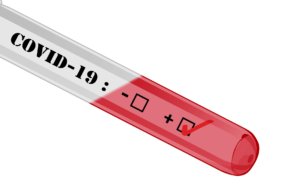 As nations are ramping up their efforts to deal with COVID-19, healthcare providers are being proactive in their response to the coronavirus outbreak. These efforts may have a considerable effect on the revenue cycle for health care and the budgets of the providers.
Coronavirus has been a major concern for health care providers on the frontline of tracking and treating infected people. The impact COVID-19 will have on the health-care revenue cycle and financial operations is among their concerns.
Maintaining the billing office in optimum operation during an epidemic is key to keeping hospitals and clinics open to people who are sick and need treatment. But this can be a challenge to respond to COVID-19 demands, particularly for smaller organizations with a limited amount of funds available.
The COVID-19 outbreak also illustrates issues relating to the financial responsibility of patients. Accounts have surfaced of patients left with medical bills of thousands of dollars after seeking care for suspected symptoms of coronavirus. Healthcare providers in the age of high deductible health plans and other cost-sharing programs are struggling to build collection strategies.
Payers recognize the efforts arising from financial responsibility for patients and many are taking steps to ease the process for patients to seek care and for providers to simplify the financial encounter.
This update is provided by CareOptimize. We provide healthcare management consulting services and products and we’ve helped numerous healthcare organizations succeed for more than a decade. We provide managed care solutions as well as products like coding modules, next-generation EHR utilities, MIPS consulting, and more. For more information, please call 855.937.8475.
 With the country on edge because of COVID-19 (better known to the masses as the coronavirus), the Centers for Medicare & Medicaid Services (CMS) have revealed new billing codes for testing the virus in labs. With these new billing codes, providers and clinical laboratories can be reimbursed for assisting patients with the virus while keeping a close eye on new cases and conducting tests. The codes have already been adopted by the Healthcare Common Procedure Coding System (HCPCS) which is utilized by insurers as well as Medicare for claims processing.
U0001 is the first billing code, released last month and aimed squarely at SARS-CoV-2 diagnostic tests done at CDC research laboratories. The second billing code (U0002) published earlier this week will allow laboratories to bill for non-CDC laboratory tests for SARS-CoV-2/2019-nCoV, or simply, COVID-19.
Per the most recent World Health Organization figures, there are more than 95,000 cases of coronavirus around the world. Of those cases, close to 100 of them are in the United States.
In light of the coronavirus, CMS has also given a call for action to health care providers. The agency recently urged providers to make sure that they are enforcing proper infection control protocols.
This update is provided by CareOptimize. We provide healthcare management consulting services and products and we’ve helped numerous healthcare organizations succeed for more than a decade. We provide managed care solutions as well as products like coding modules, next-generation EHR utilities, MIPS consulting, and more. For more information, please call 855.937.8475.


